
Check out my new article, “Wellness in the Face of Death,” in The Edge Magazine online:
http://www.edgemagazine.net/2018/09/wellness-in-the-face-of-death/
Namaste, world.
Check out my new article, “Wellness in the Face of Death,” in The Edge Magazine online:
http://www.edgemagazine.net/2018/09/wellness-in-the-face-of-death/
Namaste, world.
 I have been thinking a lot about the quality of life and death. My Buddhist teacher, Bhante Sathi, asked me one simple question that will not get out of my head. He asked me, “Are you satisfied with your life?” And I replied, “Yes.” When I look at my life, I am satisfied with everything that I did. I have a few things that I would do differently, but, all in all, I am satisfied.
An unlived life causes the fear of death. If you are happy with your life, then you can let go. But if you feel that you did not live your life, then fear can appear. Are YOU satisfied with your life?
Almost every day, I sit with the dying. I see my patients mortality and my mortality and the brief span of time that we call life. The Buddhists believe, just like in nature, there are two events: birth and death. I, too, believe that we are part of a cycle of birth and death (reincarnation). I do not fear death. However, I am curious.
Do you sleep at night? Sleep is the twin of death (Yalom, 2008). We experience a taste of death every night. Death is part of us, part of nature. And every morning is a symbol of rebirth. All things begin and end and then start again.
Most of my hospice patients decline until they are in a sleep-like coma. Also, they hold their breath. Some hospice practitioner’s call this, “Fish out of the water.” They retain their breath like a fish out of water, opening and closing its mouth. After they hold their breath, then they need to catch their breath. So it’s a cycle of retention (holding the breath) and fast breathing.
When I watch my patients breathe, I understand the importance of learning pranayama (regulation of the breath through specific techniques and exercises). Pranayama exercises help us to prepare for death. As a yoga practitioner, I understand the value of training the prana (breath/life-giving force). According to B. K. S. Iyengar (yoga master), it is best to practice pranayama with an experienced Guru or a skilled teacher.
Meditation also helps us prepare for death. Again, we watch the breath. In life, the breath is always with us.
When you are satisfied with your life, there is no fear of death. You lived your life to the fullest! No regrets. The essence of who you are stays with you. You go to sleep as you, and you wake up as you. It is through wisdom that we see the truth.
Namaste, world.
Reference:
Yalom, I. D. (2008). Staring at the sun: Overcoming the dread of death. London, Great Britain: Piatkus.

There’s a lot of death in my life right now. My father died, a childhood friend died, my best friend’s grandma died, and now my hospice patient died. I was with my hospice patient, Glenda, during her last moments.
Glenda laid peacefully in her hospital bed. She was motionless except for her slow, rhythmic breathing. I gave her a gentle foot massage. As I rubbed her feet, I noticed that I kept my eyes on her face. I knew at that moment; I was bearing witness to her death.
I do not know what it is like to die in this life. I am still living! However, after I did some Reiki for Glenda, I had a feeling of death. I balanced her Chakras, with my hands, starting with her head and then down to her feet. When I hovered over her high heart chakra, I felt a tingling sensation and vibration. There was a lot of peace and acceptance in Glenda. She died that night. The next morning during my meditation is when I received the message that death is like floating on water.
When I float on the water, I have to relax my whole body and trust that I can float. If I’m nervous or scared, I can’t float. There is a surrendering that happens. Maybe death is like that. When we die, we need to relax and trust the process. And surrender.
Surrender to something familiar and unfamiliar. A journey of comfort and love.

Choose to stay with your experience, seeing it not as the death of the self you’ve come to know, but the birth of your new life as Light. – Llyn Roberts
Namaste, world.
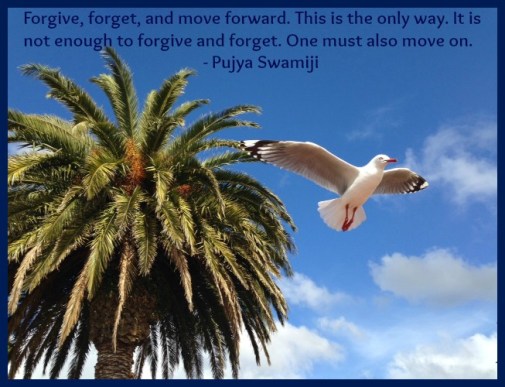
My dad died four weeks ago. One thing that I have learned so far since his death is that I need to forgive. I forgive to let go. Resentment and fear hold me back. How can I make myself light as a bird? Forgiveness.
After my dad had died, I was surprised about how people reacted. For example, all my co-workers knew that my father died, but only a few said anything to me. I understand that some people do not know what to say. So, therefore, in this case, I need to forgive people who did not acknowledge my dad’s passing.
I am learning that I have to do what is right in my heart and mind. No matter what other people are doing, I need to do what is right.
Please remember from my older post “Metta for All,” that we all need to show loving-kindness and active interest in others. When you show someone that you care about them and think about them – this is true Metta. Your presence and compassion create the spiritual leap we need as humans.
When I walk down a busy street, and I make no eye contact with other humans – this is not loving-kindness. When I walk down a street, and I make eye contact and chat with strangers – this is loving-kindness.
When my co-worker’s mother was just in the hospital, and I do not show concern or ask questions – this is not loving-kindness. When my co-worker just attended a funeral, and I express concern, ask questions, and offer help – this is loving-kindness.
Remember small gestures of kindness go a long way.
Namaste, world.

My mom tells me that people who cry have big hearts. When we have a loss, the feelings swell up in our hearts, and we cry. Losing a loved is so challenging. Every human being will face loss. My question is: How can we face loss with equanimity? Equanimity means to face a difficult situation with mental calmness and composure. There are different kinds of loss but in this article, I will discuss the loss of a loved one.
We say “hello” to the people and animals in our life, get to know them, and create memories. And then we need to say “good-bye.” It’s an endless cycle of birth and death – like the seasons. This planet is our school. We learn, over time, to have more grace and equanimity in our lives.
One way to create equanimity is to see the world in a different way, have a different perspective. When we understand the nature of impermanence, we know that nothing can last forever. We must instill hope and peace in our hearts to carry on.
I lost a beloved dog a few days ago. It was my brother’s dog, but I took care of it for almost a year. I tried to face this situation with equanimity, but my emotions took over. My definition of equanimity goes beyond having mental calmness. My definition includes having spiritual awareness, mindfulness, and understanding of loss.
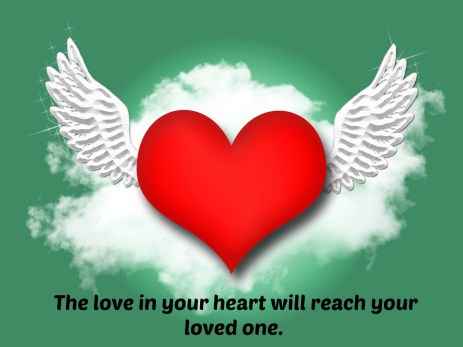
Life is so tragic, but we can create equanimity by remembering how much we love our loved ones. Love is timeless and can cross dimensions on an energetic level. The love in our hearts will reach our loved ones.
I would like to share a simple heart meditation. I learned this technique in graduate school. It’s from the HeartMath Institute (www.heartmath.org). You can do this meditation with your eyes open or closed. Also, you can do this meditation anywhere and anyplace. There are only three steps:
Step 1: Bring your awareness to your heart. Place your hand on your chest to feel your heart center. Be aware of the feelings in your heart.
Step 2: Take three deep breaths. As you breathe, feel the air pass by your heart center on each inhalation and exhalation.
Step 3: Think of a special place or person or animal that brings you a lot of joy. Bring that moment into your mind’s eye. Play it in your mind like a movie. Feel the emotions of the moment. Feel the joy and love in your heart.
This simple meditation can help you to connect with your heart and your emotions. I hope this meditation lifted your spirits and brought you calmness and joy.
Here are some equanimity key points, by Rick Hanson, Ph.D., “Buddha’s Brain: The practical neuroscience of happiness, love, and wisdom:”
Namaste, world.
 Tunnel Vision 8