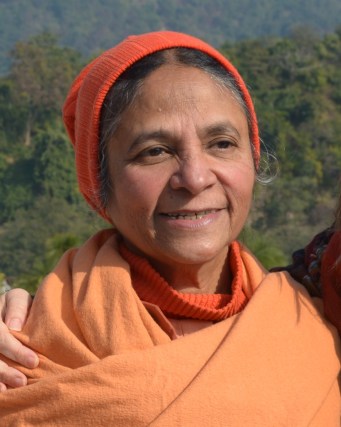
It is very important to sit and go within. We need to go inside to see and make space for the divine to enter. – Ma Tureeya, Rishikesh, India

It is very important to sit and go within. We need to go inside to see and make space for the divine to enter. – Ma Tureeya, Rishikesh, India


The new year is here: 2017. It’s a very special year. The number 17 has the sacred “7” in it. It is a new year to start changing human consciousness.
Since childhood, I have been molded and conditioned. My upbringing, my culture, the media, and society as a whole creates my reality and who I am today. I realize that to gain a new human consciousness; I need to strip my conditioning and use my vision to see a new reality; a new awareness.
If we are going to make spiritual progress as a human race, we need to see divinity and purpose in every living being; especially in people. Our leaders tell us that we are insignificant in an expansive universe and our self-esteem is continuously pushed down by the media.
The truth is that we are special and have a purpose for living. Dr. Wayne Dyer in his book, “The Power of Intention,” explains ten steps on how to fulfill your intention to live with purpose. Here are the ten steps:
Take a deep breath. All will be well in 2017 and into the future.
Namaste, world.


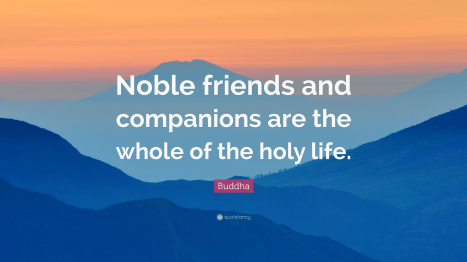
In the world of Facebook, do we need to be friends with everyone? The answer is no. It’s important to have noble friends. Noble friends are the kind of friends who are virtuous, positive and follow a healthy lifestyle. These friends look out for your best interest and care about you.
Merriam-Webster defines noble as someone who has fine personal qualities or high moral principles and ideals. James Allen, a British author, says, “A noble and Godlike character is not a thing of favour or chance, but is the natural result of continued effort in right thinking, the effect of long-cherished association with Godlike thoughts.”
A noble person is also friendly and kind towards everyone. Kindness is a wish for others to be happy. Rick Hanson, the author of “Buddha’s Brain,” says that “compassion responds primarily to suffering, but kindness comes to play all the time, even when others are doing fine.” The word “kind” comes from the root word “kin” which means family or relations. When we are kind, we bring people into the circle of “us.”

Buddhist monk Bhante Sathi (www.triplegem.org) says noble friends support each other on the path to wisdom. One of the steps to wisdom is right action. Thich Nhat Hanh, in his book, “The Heart of the Buddha’s Teaching,” describes the right action as “the practice of touching love and preventing harm, the practice of nonviolence toward ourselves and others.” The fundamental principle of right action is to do everything with mindfulness.
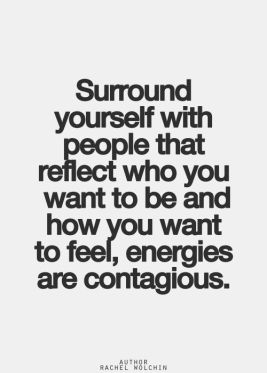
Facebook is a great tool to keep in touch with family and friends. However, some posts are more positive than others. It’s crucial to keep Facebook friends that lift your spirits and inspire you. Look for noble friends in the cyber world and in everyday life. Just like the quote at the top, it’s crucial to surround yourself with people that reflect who you want to be and how you want to feel. Seek people who have the qualities that you would like to have.

Namaste, world.

Updated on 9/27/2021.
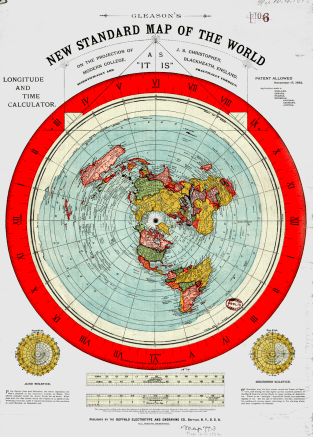
There’s a lot of debate about the shape of our world. What is the truth? Is our world flat or globe-shaped? I understand the flat earth perspective regarding the rotation of the sun and moon. When look up at the sky, the sun is the same size as the moon.
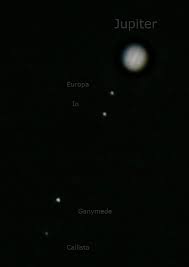
To support the globe theory, I can see other planets in the sky, and they look like globes. This past April 2016 when I was in Sedona, Arizona, I looked at the moon and stars with a space telescope. I was awed by seeing Jupiter and two of its moons with my own eyes. The image that I saw looked just like this photo:

Back to the flat earth theory, I understand the resurgence of the creation theory and that humans beings are special. Our world could be a realm or a dimension. Dimensions do not always have boundaries. It’s hard to wrap our mind around living in a dimension. Being consistently in the present moment is a good example of living in a dimension. The past is gone, and the future is unknown. We only have the present moment. The movie of our lives is always running right where we are at the moment.
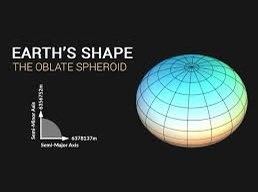
Maybe our earth is somewhere in between. It’s not perfectly flat or perfectly round like a globe. Even Neil deGrasse Tyson, a famous American Astrophysicist, said on camera that the world isn’t perfectly round. He said the earth is an oblate spheroid.

If the earth is an oblate spheroid, why would our leaders lie to us? It’s all about control, deception, money, and greed. The lies started a long time ago. We live in a manufactured world and unfortunately, we are not free. As long as there is money, there is no freedom. Just think about your life. You get up every day and go to work to earn money. A slave is a person who is the legal property of another and is forced to obey them. We have to obey the rules of our country, state, and city. We have to obey our leaders and our employers. We are not free.
The lies dig deeper into the spiritual and religious realm. We are divine beings but made to believe we are small and insignificant. The deception is purely evil, and negative energy prevents human beings to ascend into higher consciousness. We are the pawns in a big evil game.
Some human beings are waking up to the truth. Many flat earth believers think NASA is a hoax. Here is NASA’s 2016 photo of earth and the dark side of the moon:

This photo looks fake to me. What’s going on?
For now, I am going to focus on what I know. I know that I am a conscious, spiritual human being living in a plane of existence. As a spiritual being, I will master the goodness and love of Jesus and Buddha. I will increase my understanding and acceptance of all human beings as divine creatures. Every action and every word counts towards positive or negative vibration. We are responsible for our lives and held accountable for our actions.
I am sending peace out into our world. Be who you are, where ever you are.
Namaste, world.


Where am I?
I am on the back of a motorcycle…
I am on a massage table…
I am flying over New Zealand….
I am meditating in a temple…
From moment to moment, I am somewhere. However, my moments merge as my consciousness goes back to my past moments and jumps into my future moments. As a multi-dimensional being, I can be anywhere.
John Hagelin says, “In our quantum view of the universe, consciousness is ubiquitous. Intelligence is everywhere. And the deeper you go beneath the surface, the more intelligence, the more dynamism, the more awareness, until at the foundation of the universe there is a field of pure, abstract universal existence – universal Consciousness…the unified field.”
My mind can go to the past, and to the future, however, all I have is the present moment. Eckhart Tolle reminds me that I will die in the present moment. So it is true that I can be anywhere, but real living is in the present moment.
The mind is always looking for the next moment. To settle into the present moment is challenging for the mind. If you let your life be guided by the present moment, then you are not attached to the moments. They come and go like the breath.
The breath is a beautiful example of life and death. The life part of the breath is the inhale and the death part is the exhale. Like all things in life, there is a fading until death. Now we know that death isn’t so scary because we are part of it every moment.
So where am I? I am where my consciousness resides.
Namaste, world.


A couple of years ago, I ran a 10K for MuckFest MS. My group, “Dirty Naked Axons,” had novice runners and athlete runners. I somehow ended up in the athlete group. It was tough keeping up! However, I learned how to use mindfulness breathing while running.
MuckFest MS was held at a ski resort so you can imagine all the hills. I remember running up a steep part of a deeply wooded hill. It was steep, rocky, and muddy. I was getting tired, and I wanted to give up and stop. But then I decided to connect with my breath. I was breathing deeply, but my breath was light. I focused on the lightness of my breath rather than the heaviness of my body. Once I was mindfully running, I realized that the breath transformed my effort. I finished the race – with the athletes.
Another breathing technique that I use for exercise, Yoga, and to help me fall asleep is called Ujjayi. In Sanskrit (Iyengar, 1966), it means “expanding victory or triumph.” It is also sometimes called “oceanic breath” because of the sound ebbs and flows like the sea. The Ujjayi breath is created by constricting the laryngeal muscles and partially closing the glottis in the throat (Brown, 2005). This slow breathing is 2 to 4 breaths per minute. Increasing airway resistance produces a longer inspiration and expiration. Several physiological effects that make the practitioner feel calm and alert. Zope et al., (2013) stated that the nervous systems shifts to a parasympathetic state via vagal stimulation and increases respiratory sinus arrhythmia (RSA).
Ujjayi breathing has been shown to induce sleep (Brown, 2005). Many people who suffer from depression experience insomnia. According to Brown (2005), “Many patients find that an extra 5-10 minutes of Ujjayi breathing while lying in bed at night with the lights out will help induce sleep” (p. 712). Ujjayi relaxes the body, reduces obsessive worry, and creates mental calmness conductive to sleep (Brown, 2005).
How to perform Ujjayi breathing (Iyengar, 1966):
Using mindfulness and the Ujjayi breathing technique help to ease the mind and body. Breathing techniques are tools to help us in challenging moments. I finished the MuckFest MS race because I ran with my breath.
Namaste, world.

References
Brown, R.P., & Gerbarg, P.L., (2005). Sudarshan kriya yogic breathing in the treatment of stress, anxiety, and depression: Part I – Neurophysiologic model. The Journal of Alternative and Complementary Medicine, 11(1), 189-201.
Brown, R.P., & Gerbarg, P.L., (2005). Sudarshan kriya yogic breathing in the treatment of stress, anxiety, and depression: Part II – Clinical applications and guidelines. The Journal of Alternative and Complementary Medicine, 11(4), 711-717.
Iyengar, B.K.S. (1966). Light on yoga. New York, NY: Schocken Books, Inc.
Zope, S.A., & Zope, R.A., (2013). Sudarshan kriya yoga: Breathing for health. International Journal of Yoga, 6(1), 4-10