Spirituality & Caring for the Dying

lotus

“Death is not the opposite of life. Death is the opposite of birth. Life is the continuum of birth and death.” — Deepak Chopra

Many people have done little work to prepare for death on a psychological, spiritual, and social level. Why do we fear death so much? How can spiritual practices prepare us and aid us in the dying process? These are profound questions that are important for us to consider for ourselves and our loved ones.

According to Murray, Kendall, Boyd, Worth, and Benton (2004), “Spiritual needs are the needs and expectations which humans have to find meaning, purpose and value in their life. Such needs can be specifically religious, but even people who have no religious faith or are not members of organized religion have belief systems that give their lives meaning and purpose” (p. 40). Defining spirituality and spiritual needs can be difficult because each human being has their definition. Edwards, Pang, Shiu, and Chan (2010) add, “A crucial question is whether or not patients themselves recognize the concept of spirituality as defined by healthcare professionals. Patients may not understand the term ‘spirituality.’ What professionals assume to be spiritual care might not correspond with patients’ understandings and needs” (p. 24). There are several barriers to spiritual care such as personal, cultural, institutional, and educational needs of professionals.

What are some of the spiritual needs of patients? The main spiritual needs are 1. The need for closure (finish business and reconciliation). 2. The need for involvement and control over daily activities. 3. To remain involved with family and in decisions about their lives. And 4. Need to for a positive outlook (happy thoughts, to see the smiles of others, humor, and laughter).

My grandmother died this past July. She was 94 years old. I knew that she was dying, but I did not go to her bedside to say, “Good-bye.” Now I regret not going to see her. I was not there but I know my grandma loves me, and I love her – this is all that matters.

grm theresa Grandma Theresa

I grew up in Catholic religion, but now I am a Buddhist. I consider myself a Catholic Buddhist – if there is such a thing! In the Buddhist tradition, according to Hawter (1995), “It is emphasized strongly that the time to prepare for death is now, because if we develop and gain control over our mind now and create many positive causes we will have a calm and controlled mind at the time of death and be free of fear” (p. 3). The way to a calm and controlled mind is through meditation. Meditation trains the mind like running trains the body. Also, in the Buddhist tradition, it is important to die with a calm and peaceful mind.

How can spiritual practices aid the patient in the dying process according to the Buddhist tradition? If the patient is conscious, then he or she can do the practices with his or her family, minister, or spiritual counselor. If the patient is unconscious, then the family/minister/spiritual counselor will recite prayers or mantras into his or her ear. Hearing is the last sense to be lost. It is important to do whatever reminds the patient of his or her spiritual practice. It is beneficial to have spiritual objects around the dying patient (for example an altar, a rosary, photos of the spiritual teacher). Playing spiritual music, burning incense, and singing songs can also help calm the patient.

For patients that are in advanced illness but are still conscious benefit from simple meditation techniques and visualizations. Also, a gentle massage, Reiki, aromatherapy, or reflexology can be soothing and stress-relieving. Again, it’s important to help the patient have a peaceful mind as they approach death.

We do not need to fear death. Actually, according to Reagan (2013), “We are discovering that simply contemplating death can make us happier, healthier, and better citizens…as we confront our mortality, we are midwifing the difficult birth of a multidimensional transformation – physical, spiritual, psychological, social, and ecological” (p. 38).

Namaste, world.

healer

References

Edwards, A., Pang, N., Shiu, V., & Chan, C. (2010, winter). The understanding of spirituality and the potential role of spiritual care in end-of-life palliative care: a meta-study of qualitative research. Palliative Medicine, 24(8), 753-770

Hawter, P. (1995, August). The spiritual needs of the dying: a buddhist perspective. Retrieved from: http://www.buddhanet.net/spirit_d.htm

Murray, S., Kendall, M., Boyd, K., Worth, A., & Benton, T. (2004, January). Exploring the spiritual needs of people dying of lung cancer or heart failure: a prospective qualitative interview study of patients and their careers. Palliative Medicine, 18(1), 39-44

Reagan, L. (2013, winter). Death makes life possible: bridging consciousness, science, and spirit. LILIPOH, 18(70), 36-40

India Reflections

_facebook_369931915

A lot of people ask me, “What was India like?” To experience India, one must travel there. Most people will never step foot on its land. I have an inside look at this fascinating country, and I would like to share a few of my spiritual reflections.

India is a vast land with crazy, populated cities and third-world villages. There is no place on earth like India. I saw a country with its mix of hospitality, dirt, tradition, poverty, and beauty. India mirrors all the good and the bad in life.

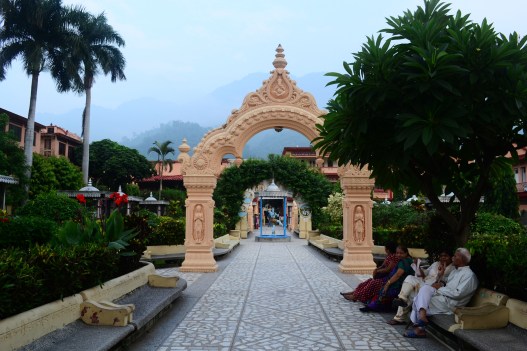
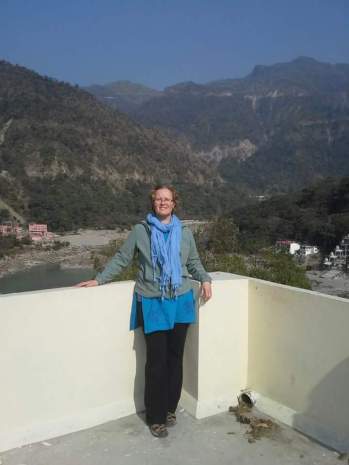
I have several reflections that I brought back from my experience in India. Each one created something new in my consciousness. Several of these experiences was at Parmarth Niketan Ashram – a place I’d like to visit again. Parmarth Niketan is five hundred miles north of Delhi – about an eight-hour bus ride. It is at the foothills of the Himalayan Mountains, and the Ganges River flows through the town.

The spiritual teacher of the ashram is Pujya Swami Chidanand Saraswati. The ashram is famous and well-known around the world. Famous people visit the ashram, including Dalai Lama, actress Uma Thurman, and singer Sting. Even Prince Charles and Camilla visited in November 2013. Parmarth Niketon is active in community service and has projects for orphans. The ashram currently houses 200 orphan boys, and it has plans to open an orphanage for girls. The ashram supports women empowerment projects and rural and environmental programs. Parmarth Niketan is a magical place to stay.

parmarth N.jpg

One reflection brings me back to my first morning at the ashram. I attended the Vedic chanting group that gathered at five in the morning. It was still dark and foggy outside as I walked to the temple. During the chanting session, I absorbed the sounds. My body swayed to the music as I connected with the people around me. The orphan boys played instruments and chanted. The monks in orange robes sat on the stage.

I was in pure bliss and happiness to be at the ashram. During the quiet, meditative time, I had a vision or realization. I understood my connection to all things, and I understood the power of touch. As I touched the floor, I connected with the energy of the past and the future attendees. I was the link – living in the present. Like quantum physics, I could tap into the energy field. I knew I could connect with all that is, all that was, and all that will be.

According to John Hagelin, an American particle physicist and the director of the Transcendental Meditation movement, “In our quantum view of the universe, consciousness is ubiquitous. Intelligence is everywhere. And the deeper you go beneath the surface, the more intelligence, the more dynamism, the more awareness, until at the foundation of the universe there is a field of pure, abstract universal existence – universal Consciousness -the unified field.”

After the chanting ceremony, I walked to the beautiful Ganges River. It was still dark outside with emerging light beams from the rising sun. The moon was in its full splendor, and the air was crisp and cool. I could hear the river flowing and feel the mystical ambiance of people near me.

GayatriGG.png

I felt a magnetic pull toward the Ganges River. I sat next to the flowing river that was alive and wanting. It was dangerous to sit near the water because of the fast current. I could see the dark ripples in the water and the reflection of the rising sun.

At that moment, my heart was full of gratitude. I was in India! Tears started to warm my cheeks as I sat alone with my scarf around my head. They were not tears of sadness. They were tears of appreciation and understanding.

I put my hand into the water to feel the power of the river. The Ganges River is holy because the people of India say it is so. Where people put their worship and their love – this makes something holy. All through India, everywhere I went, I touched my hand to the sacred buildings, the temples, the land, and the people.

Another reflection – the group and I hiked through Rishikesh to visit a Catholic nun named Ma Tureeya. Ma Tureeya stressed the importance of service. She said, “See suffering and reach out.” India has a lot of people living in poverty. In my mind, I have a new definition of poverty. These people were dirt poor! Many were living in shacks or on the streets with make-shift tents. It is shocking to see hundreds of poor people. Riding in a luxury tour bus looking out at starving, poor people did not seem right. I remember seeing a raggedy six-year-old boy walking alone and barefoot, in the cold, from car to car during heavy traffic begging for money. This image continues to stay with me.

Ma Tureeya understood the “other dimension” and said something profound: Make space for the divine to enter. She said it’s important to sit in silence and go inside. To go inside “to see.” She said, “God does the work, not the ego. Do not seek the fruits. See what God wants of you – this is important. Put your total trust in God.” She also stressed the importance of fewer possessions and more giving. Since I’ve been back from India, I feel like I have less attachment to things in my life.

The people of India have transformed my consciousness in many ways. I admire how they are so dedicated to their Gods. In India, worship is part of everyday life. Temples and shrines dot the land. One day, I saw a middle-aged Indian man dipping his whole body in the freezing Ganges River to purify his spirit. I, too, felt the mystical power of the Ganges River.

According to author Stephen Knapp (Sri Nandanandana dasa), “These places are where the material and spiritual energies overlap. Although the spiritual energy may pervade the universe, at such holy places or tirthas the experiences of higher dimensions are easier to attain. This is what gives these places special meaning amongst those who can perceive or know this multidimensional aspect.”

Visiting India is like stepping into the unknown, and you have no choice but to trust. India runs on crazy. Nothing seems to make sense, but it all works out in the end. Just like the caterpillar that thought its life was over – then it turned into a beautiful butterfly.

Namaste world.

_facebook_-1215282815


The Living Club

enjoy life

I saw my new hospice patient today. This is the second time that I have visited with her. Susan is a beautiful woman who is in her early sixties. She is dying from lung cancer. Last night she was moved from her home to a hospice house.

When I visited with her today, she was awake but not consciously awake. It was like she was in a daze. As she laid curled up in a fetal position, she spontaneously said, “I want to go.” Her daughter told me that she’s been saying that a lot lately. Sometimes when people are dying they use symbolic language. When she says, “I want to go,” she may be saying that she is ready to die. A wonderful book about communication of the dying is called, “Final Gifts: Understanding the Special Awareness, Needs, and Communications of the Dying.” It is written by Maggie Callanan and Patricia Kelley.

I sat and gently rubbed Susan’s forehead. She was resting with her eyes closed. My thoughts turned to life. Being present with those who are dying puts a lot perspective on living. We are two women; one who is in the living club and one who is in the dying club. Many people die each day. According to Wikipedia, roughly 150,000 people die each day across the globe. That’s a lot of people!

I am part of the living club. I feel so blessed to still be here on this earth! I just want to jump and shout, “I am living!” I have so much that  I want to do and experience. I have a lot of gratitude in my heart.

Living in the present moment helps me realize: I am here now. What a gift!

Namaste, world.

present


Creating Space

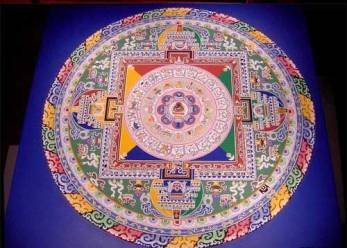
buddhist_sand_art_13   Buddhist Monk Sand Art

I have a great need for creating inner and outer space in my life. To start creating this space, I need to clean out my past. I had written forty journals that were stacked neatly in two large boxes. I began writing in journals when I was twelve years old.

I recently decided to recycle all of my journals. I was going to burn them, but I had way too much paper. It would take me forever!

I destroyed all forty journals. They are gone. After the recycling truck had come, I asked myself, “What have I done?” A record of my life is gone forever.

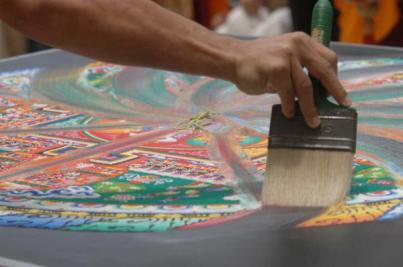
I compare letting go of my journals to the creation and destruction of the Buddhist monk sand art. The Buddhist monks work diligently and carefully creating a beautiful mandala. Then once it is complete, it is ceremoniously destroyed.

sand

The destruction of the sand art symbolizes the impermanence of life. Now that my journals are gone, I have created space to create something new…like this blog. I can be in the present moment and not tied down by my past.

My journals told a story, and the preservation of them would have created a legacy. However, I wrote with emotion, and my journals helped me let go of my feelings. I am spiritually lighter now that they are gone.

It is time for me to create a new story.

Namaste, world.

“The world is a passing phenomenon. We all belong to the world of time. Every written word, every carved stone, every painted picture, the structure of civilization, every generation of man, vanishes away like the leaves and flowers of forgotten summers. What exists is changeable and what is not changeable does not exist.” –Samyutta Nikaya Sutra

We Are Moving: Part II

Cosmic-Heart2“Love is the affinity which links and draws together the elements of the world…Love, in fact, is the agent of universal synthesis.” — Pierre Teilhard de Chardin

Love is all that matters. I know that I can even love a stranger. When I met my first hospice patient, I loved her right away. Barbara was in her mid-seventies, dying from breast cancer. She talked with a high, squeaky voice and she was always kind. She had the innocence of a child.

From the very first moment of our meeting, we had a heart exchange and a creative union. She was truly herself; she presented her essence to me and all the people around her. She brought out the best in me because she was communicating at a higher consciousness.

By the time I met Barbara, she had accepted her fate…she was dying. Her daily consciousness was shifting inward as she prepared to die. My last moment with her is one that I will never forget. I was alone with Barbara while she was sleeping. She had just moved from her home to a nursing home. As Barbara slept, I gently placed my hands on her Chakras, and I held her feet. I could sense movement in the room – and it wasn’t Barbara or me. Spiritual energy was witnessing our love and friendship. I greeted this spiritual energy as if I intuitively knew what it was.

Barbara died while I was on a weekend trip. I had a feeling that she die by the time I returned home. Barbara’s spirit is still alive; she moved into the intergalactic space where she will transform once again.

Namaste, world.

 intergalactic space

We Are Moving: Part I

We are moving! I am excited about the thought of moving and seeing ourselves as cosmic travelers in the universe. Nothing is static. Our sun and moon rotate around the Earth, the season’s change, the time of day changes, we change, and everything is moving. It is an honor be part of this great dance of life.

I just spent a weekend at a retreat center learning about the emergence of a new humanity and the quantum leap into a new consciousness (teachings by Pierre Teilhard de Chardin and Thomas Berry). The discussion was very deep, and I am still integrating everything that I learned.

This is what I learned from the workshop (Part I):

Our new human emergence requires us to row together in the same boat. The solo journey is over. We row together toward a new understanding of life. The new consciousness is of unity and to create an Earth community. Rowing together will take courage and openness to a new way of communication, a new way of being. It calls for every human being to seek greatness and create an epic life.

We all influence each other, and we will eventually see the divine in each other. The divine is moving with the cosmos. Evolution is happening within our cells. It is time to take an evolutionary leap and see that even God is evolving. The role of the human is to bring dimensions of God forward.

We are cosmological and connected to the cosmos. We need to create stillness through meditation to connect with the interspace before we can connect with the outer space. Through the practice of meditation, we gain contemplative presence.

This contemplative presence involves the essence of ourselves. Essence will create the new being. For example, essential oils and flower essences are very popular right now. The essence of the herbs and flowers are squeezed out – we only harvest the best of the plant. The most concentrated part of the plant is the essence. Our essence, the spirit part of us, must be present when communicating with each other and other living beings.

Creative merging happens when we use our essence. How can it not? When we bring forward the best part of ourselves, there is expansion and creativity. A new consciousness is born.

This message in a bottle is good news: We are moving!

Namaste, world.