The Power of Deep Breathing to Reduce Anxiety

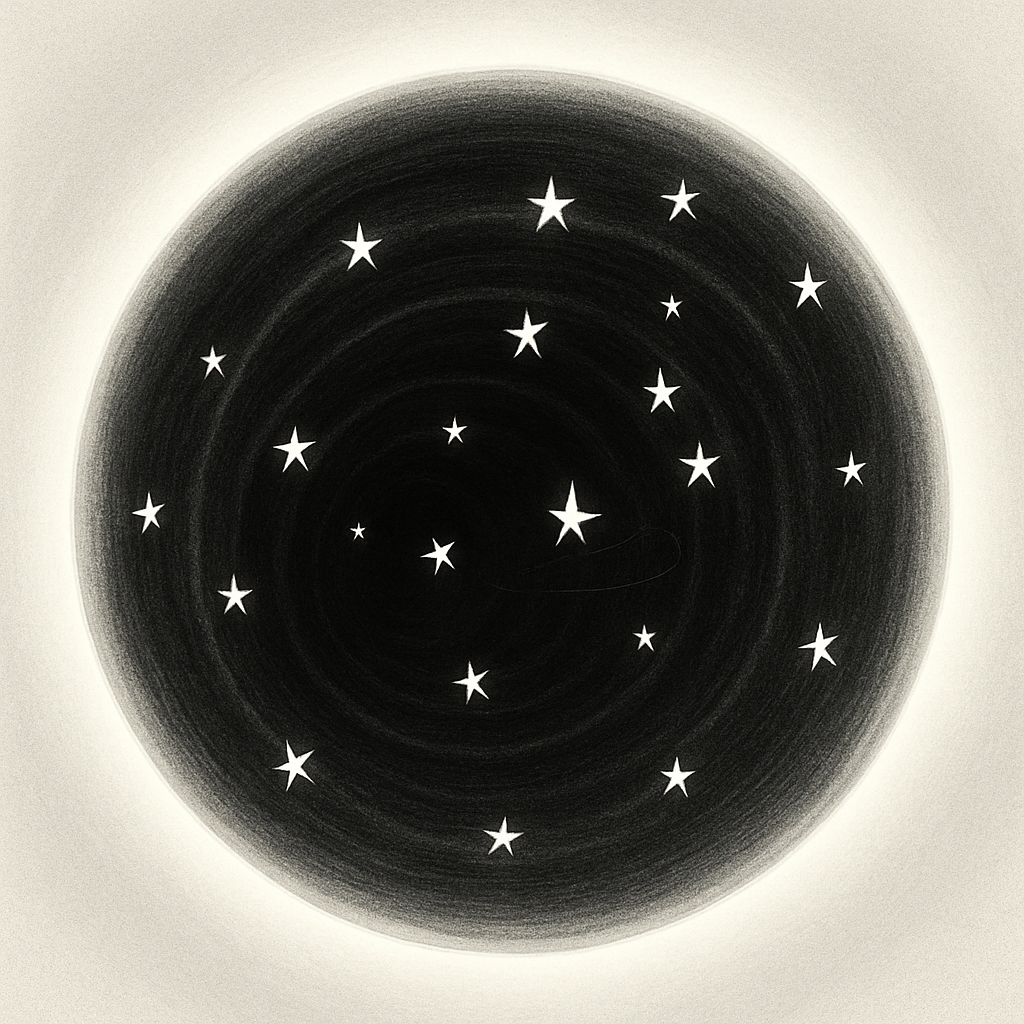
Several weeks ago, as I woke up from sleep, I had a vision. I saw a tunnel about three inches in diameter open up near my forehead (third eye area). I heard a “snap” as it briefly opened up for a second. I saw a ring of light around the circle, and in the center of the circle were white, twinkling stars in a black background.

AI generated from my sketch.

I’ve never had a vision like that before. I wasn’t scared, but I also didn’t feel ready to go “down that rabbit hole.” I even questioned if I was ready to dive deeper into my spirituality.

To calm my nervous system, I practiced Ujjayi Pranayama. Here is the practice:

  1. Start to breathe in and out through your nose, naturally (mouth closed).
  2. Then take a slow, deep breath through both nostrils. The passage of the incoming air is felt on the back of the palate and makes an oceanic sound (sa). The sound is audible and loud enough to be heard.
  3. Exhale slowly, deeply, as the outgoing air is felt on the back of the palate and makes a sound (ha).
  4. Repeat the cycle for five to ten minutes.
  5. Ujjayi breathing sounds like the ebb and flow of the ocean.

Ujjayi Pranayama is also helpful when practicing yoga, especially during pain when stretching. I remember reading years ago that yoga can give the practitioner the skills to work with pain.

One more thing, emotions are very powerful. We can use our emotions to send out our intentions into the universe. If you feel a strong emotion, send out a prayer with that emotion as a catalyst for change.

Namaste.

Reduce Anxiety with Breathing Techniques

Yesterday, I went walking with a friend of mine. We both noticed that we had an increase in anxiety. The world continues to change right before our eyes. It’s easy to feel worried and anxious.

We must remember that things can change quickly, and they can change for the betterment of humanity. My friend and I reminded each other to stay positive. My friend, Roxanne, said, “God always wins.”

Remember, emotions carry an energy charge. Emotions of fear and anxiety are lower vibrations, and emotions of peace and gratitude are higher vibrations.

Deep breathing is proven to calm the nervous system. According to Dr. Henry Emmons, “Breathing is integral to our lives, and conscious breathing – breathing done with awareness – can be a terrific way of altering our mood, overcoming depression, anxiety, and sleeplessness. Proper breathing helps to integrate our body, mind, and spirit. It’s also crucial to our brain chemistry.” Here are two breathing techniques to try:

The Calming Breath Technique, by Dr. Emmons from his book, “The Chemistry of Joy,” can help when you feel anxious.

  1. Slowly breathe in through your nose.
  2. Hold your breath for a few seconds.
  3. Breathe out even more slowly through your mouth. Try to make your exhalation take longer than your inhalation. You may structure your breathing, if you like, by counting to four as you breathe in, to two as you hold the breath, and to seven as you breathe out. Make an audible sigh with your out-breath.

If you practice yoga and pranayama, you can follow the Sudarshan Kriya Pranayama Count (see below). If you need more information about the technique, check out https://www.stylecraze.com/articles/sudarshan-kriya-steps-and-benefits/ and https://www.artofliving.org/in-en/what-sudarshan-kriya

Namaste, world.

Calling All Spiritual Leaders

Dear Spiritual Leaders,

We are born in this lifetime for a reason. We must help our fellow human beings – it is our most important task, especially now with the worldwide pandemic. Please step-up to your leadership role. There are several things we must do:

  • Show people how to develop consciousness (awareness) and how to retain it.
  • Encourage people to meditate every day.
  • Control and manipulation in energy form will come from the technology that we use every day (smartphones, computers, television, and smartwatches, etc.). Help people limit their screen time. The pandemic is pushing us more and more to use technology (especially children).
  • Teach people how to keep the love energy running – instead of fear-based energy. Give them the tools (meditation, Reiki, prayer, mantras, symbols, connect with angels/teachers, scripture, visualizations, love-mantras, etc.). Love energy is power and protection (armour = protection + amour = Love).
  • Teach people how to access their holographic brain. We need to understand the concept of living multidimensionally. We have access to the past, present, and future. We can heal past events.
  • Remember, energy is connecting to information. What kind of information is beneficial to us? And what kind of information is damaging?
  • Help people move the focus of their spiritual practice from yoga to pranayama (start with alternate nostril breathing). The breathing practices balance the human brain. Everyone should still do yoga and meditation every day.
  • Teach people how to use intention and how to open their third eye.
  • Help people realize there is strength in their religious and spiritual beliefs. Everyone needs to stay connected with their church or spiritual center.

Thank you.

Namaste, world.

The Lived Life

butterfly girlI have been thinking a lot about the quality of life and death. My Buddhist teacher, Bhante Sathi, asked me one simple question that will not get out of my head. He asked me, “Are you satisfied with your life?” And I replied, “Yes.” When I look at my life, I am satisfied with everything that I did. I have a few things that I would do differently, but, all in all, I am satisfied.

An unlived life causes the fear of death. If you are happy with your life, then you can let go. But if you feel that you did not live your life, then fear can appear. Are YOU satisfied with your life?

Almost every day, I sit with the dying. I see my patients mortality and my mortality and the brief span of time that we call life. The Buddhists believe, just like in nature, there are two events: birth and death. I, too, believe that we are part of a cycle of birth and death (reincarnation). I do not fear death. However, I am curious.

Do you sleep at night? Sleep is the twin of death (Yalom, 2008). We experience a taste of death every night. Death is part of us, part of nature. And every morning is a symbol of rebirth. All things begin and end and then start again.

Most of my hospice patients decline until they are in a sleep-like coma. Also, they hold their breath. Some hospice practitioner’s call this, “Fish out of the water.” They retain their breath like a fish out of water, opening and closing its mouth. After they hold their breath, then they need to catch their breath. So it’s a cycle of retention (holding the breath) and fast breathing.

When I watch my patients breathe, I understand the importance of learning pranayama (regulation of the breath through specific techniques and exercises). Pranayama exercises help us to prepare for death. As a yoga practitioner, I understand the value of training the prana (breath/life-giving force). According to B. K. S. Iyengar (yoga master), it is best to practice pranayama with an experienced Guru or a skilled teacher.

Meditation also helps us prepare for death. Again, we watch the breath. In life, the breath is always with us.

When you are satisfied with your life, there is no fear of death. You lived your life to the fullest! No regrets. The essence of who you are stays with you. You go to sleep as you, and you wake up as you. It is through wisdom that we see the truth.

Namaste, world.

Reference:

Yalom, I. D. (2008). Staring at the sun: Overcoming the dread of death. London, Great Britain: Piatkus.


The Magic of “Om”

Om Wallpaper

Om or Aum is a sacred sound and symbol. Om is the universal sound; the first sound of creation. In the yoga sutras by B.K.S Iyengar (1993), “Aum is called Pranava, which stands for the praise of the divine and fulfillment of divinity.” Iyengar continues to say, “Sound is vibration, which as modern science tells us, is the source of all creation. God is beyond vibration, but vibration, being the subtlest of His creation, is the nearest we can get to Him in the physical world. So we take it as His symbol.”

I have been using Om in my pranayama practice. Yogic breathing is called pranayama in Sanskrit. Brown et al., (2005) defines pranayama as “meaning both control of energy and expansion of energy” (p. 189). In other words, Brown says that the breath is energy, and we have control over it. Brown (2005) states, prana is defined as breath or life force. According to Iyengar (1996), “pranayama by nature has three components: inhalation, exhalation, and retention. They are carefully learned by elongating the breath and prolonging the time of retention according to the elasticity of the torso, the length and depth of breath and the precision of movements” (p. 33). Iyengar’s point is to learn to hold the breath for longer periods of time to increase the volume oxygen in the body.

Breath links the body and mind. Yogic breathing techniques can be used to balance the autonomic nervous system and have a positive effect on stress-related disorders. When individuals are under stress, they restrict their breathing and decrease the amount of oxygen coming into their bodies (Wilkinson, 2002). Yogic breathing techniques increase the volume of oxygen in the lungs and help the body to relax and the mind to focus.

When I chant Om, I repeat it three times with a long expiration. Chanting Om has complex effects on the brain; especially in the Wernicke’s area and the thalamus (Brown, 2005). According to Brown et al., (2005), “Even just mentally chanting Om showed decreased metabolism, decreased heart rate, and increased peripheral vascular resistance in seven experienced yogic meditators” (p. 195). Chanting Om also increases synchronicity of particular biorhythms in the brain (Zope, 2013). D’Antoni et al.(1995) state that “mantra production frequently employs the phonemes, m, and n, which are thought to evoke pleasant association and a feeling of release” (p. 309). The chant Om has the phoneme m in it.

Om is magical. I have experienced its effects on my mind and body. I am an emotional person and sometimes I have a difficult time controlling my emotions. According to The Art of Living Foundation (http://www.artofliving.org), “rather than allowing the emotions to alter the breath (and cause physiological changes which may prove unhealthy), one can skillfully use the breath to transform one’s emotional state.” When someone is angry, the breath is short and quick. And when someone is sad or upset, the breath is long and deep. Om can be used to control the breath and balance the emotions.

I had a little health scare this past month. I found a few pink, scaly spots on my face. I was worried that I might have skin cancer. So last week I went to the dermatologist. I made a plan that I would silently use the Om chant while I sat in the office, and during the consultation and treatment. I was surprised how chanting Om helped me to be calm and feel centered. I did not get upset, and my heart rhythm was strong.

I found out that I do not have skin cancer. I have Actinic Keratoses. It’s a common skin disorder from years of sun exposure. Actinic Keratoses is considered precancerous. If left untreated, Actinic Keratoses may turn into squamous cell carcinoma. I am treating my spots (with liquid nitrogen), so hopefully I will not get skin cancer.

I can count on the magic of Om to balance the biorhythms in my brain and in my heart. I have to admit; I was scared that I was going to die from skin cancer. Deep breathing and prayer helped me connect with God and the universe. Life can be scary, so we need to learn to breathe through it.

Namaste, world.

breathe in peace

References

Brown, R.P., & Gerbarg, P.L., (2005). Sudarshan kriya yogic breathing in the treatment of  stress, anxiety, and depression: Part I – Neurophysiologic model. The Journal of Alternative and Complementary Medicine, 11(1), 189-201.

Brown, R.P., & Gerbarg, P.L., (2005). Sudarshan kriya yogic breathing in the treatment of stress, anxiety, and depression: Part II – Clinical applications and guidelines. The Journal of Alternative and Complementary Medicine, 11(4), 711-717.

D’Antoni, M., Harvey, P., & Fried, M. (1995). Alternative medicine: Does it play a role in the management of voice disorders. Journal of Voice, 9(3), 308-311.

Iyengar, B.K.S. (1966). Light on yoga. New York, NY: Schocken Books, Inc.

Iyengar, B.K.S. (1993). Light on the Yoga Sutras of Patanjali. Hammersmith, London: HarperCollins Publishers.

Wilkinson, L., Buboltz, W. C., & Young, T. (2002). Breathing techniques to promote client relaxation and tension reduction. Journal of Clinical Activities, Assignments & Handouts in Psychotherapy Practice, 2(1), 1-14.

Zope, S.A., & Zope, R.A., (2013). Sudarshan kriya yoga: Breathing for health. International Journal of Yoga, 6(1), 4-10.